Received: May 2026
DOI 10.17677/fn20714807.2026.03.01
Fluorine Notes, 2026, 166, 1-2
SYNTHESIS PATHWAYS OF FLUORINATED CARBOXYLIC ACIDS. COMMUNICATION 2
S.V. Vershilovа, V.V. Kornilov, A.S. Tsyrulnikovaа, N.V. Lebedevа
aS.V. Lebedev Scientific Research Institute of Synthetic Rubber
Abstract: Fluorinated carboxylic acids derivatives can be prepared by the oxidation of fluoroalkenes. The use of various media and oxidizing agents opens up the new applications for Henne's classical method. Preparing carboxylic acid derivatives by hydrolysis and pyrolysis of fluoroethers and cleavage of perfluorinated ethers under the action of Lewis acids are also discussed.
Keywords: fluorinated carboxylic acids (fluorocarboxylic acids), fluoroalkenes, potassium permanganate, internal double bond, terminal double bond, perfluoroalkyl substituent, fluoroethers, fluoroesters.
Introduction
The first part of the review examined the following synthesis methods of fluorinated carboxylic acids: electrochemical fluorination (ECF), isomerization and anionic polymerization of perfluoroalkene oxides, and oligomerization of perfluoroalkenes in the processes of liquid-phase oxidation [1]. This article focuses on the oxidation of fluorinated alkenes with carbon chain reduction, as well as the hydrolysis and cleavage reactions of fluorinated ethers.
1. Oxidation of polyfluoroalkenes with carbon chain shortening
In 1945, Albert Henne and co-workers (The Ohio State University) first proposed a method for preparing fluorinated carboxylic acids by the oxidation of fluorinated alkenes with potassium permanganate in an alkaline medium [2]. The article described the rapid and nearly quantitative obtaining of trifluoroacetic acid from 3,3,3-trifluorotrichloropropene-1 (heating at 65–70 °C, stirring, 90% yield) according to the equation in Scheme 1.

Scheme 1 [2].
Using this method, difluoroacetic acid was also obtained from CHF2CH=CCl2 (yield 86%) and chlorodifluoroacetic acid from CClF2CCl=CCl2 (yield 70%).
The limiting factors of this method were, on the one hand, the presence of a sufficient number of fluorine atoms to ensure the resulting acid was stable in the haloform reaction; on the other hand, the fluorine atoms had to be in a specific position. Thus, A. Henne's attempt to obtain dichlorofluoroacetic acid from CCl2FCCl=CCl2 was unsuccessful.
Similarly, acids with a difluoromethylene group in the α-position (CH3CF2COOH and C2H5CF2COOH) were obtained [3]. However, the synthesis of acids with fluorine atoms in the β-position led to the formation of CF2=CHCOOH instead of CF3CH2COOH and CH3CF=CHCOOH instead of CH3CF2COOH.
Oxidation of alkenes containing an internal double bond usually involves carbon-carbon bond cleavage to form two molecules of carboxylic acids. Thus, A.L. Henne and P. Trott [4] described the formation of two trifluoroacetic acid molecules (83% yield) by the oxidation of 1,1,1,4,4,4-hexafluorodichlorobut-2-ene (Scheme 2).

Scheme 2[4].
Subsequently, fluorinated carboxylic acids were prepared by the oxidation of fluorochloroalkenes, fluorochlorocycloalkenes, perfluorocycloalkenes and other fluoroalkenes [5-11]. Some examples of preparing acids by the oxidation with potassium permanganate in an alkaline medium are summarized in Table 1.
Table 1. Examples of preparing fluorinated carboxylic acids.
|
Alkene |
Acid |
Conditions |
Yield |
Ref. |
|
CH3CF2CCl=CH2 |
CH3CF2CO2H |
b.p., 75 min |
76 |
[3] |
|
С2H5CF2CH=CH2 |
C2H5CF2CO2H |
" " |
53 |
[3] |
|
cyclo-C4F4Cl21) |
HO2CF2CF2CO2H |
" " |
70 |
[3] |
|
cyclo-C4F6 |
HO2CCF2CF2CO2H |
- 70ºС, 10 h, autoclave |
34 |
[3] |
|
cyclo-C4F6 |
(CF2COOH)2 |
105ºС, 14 h, autoclave |
93 |
[8] |
|
СFCl2CF2CO2H |
СFCl2CF2CF=CF2 |
70-80 ºС, 7-10 h, autoclave |
62 |
[12] |
|
CFCl2CF2CFClCF2CO2H |
CFCl2CF2CFClCF2CF=CF2 |
70ºС, 8 h, |
57 |
[12] |
|
CFCl2CFClCO2 |
CFCl2CFClCF=CFCl |
80ºС, 8 h, |
74 |
[13] |
|
(CFClCO2H)2 |
cyclo-C4Cl2F4 2) |
70ºС, 10 h, autoclave |
62 |
[13] |
1) 1,4-dichloro-tetrafluorocyclobutene-1; 2) 2,3-dichlorotetrafluorobutene-1
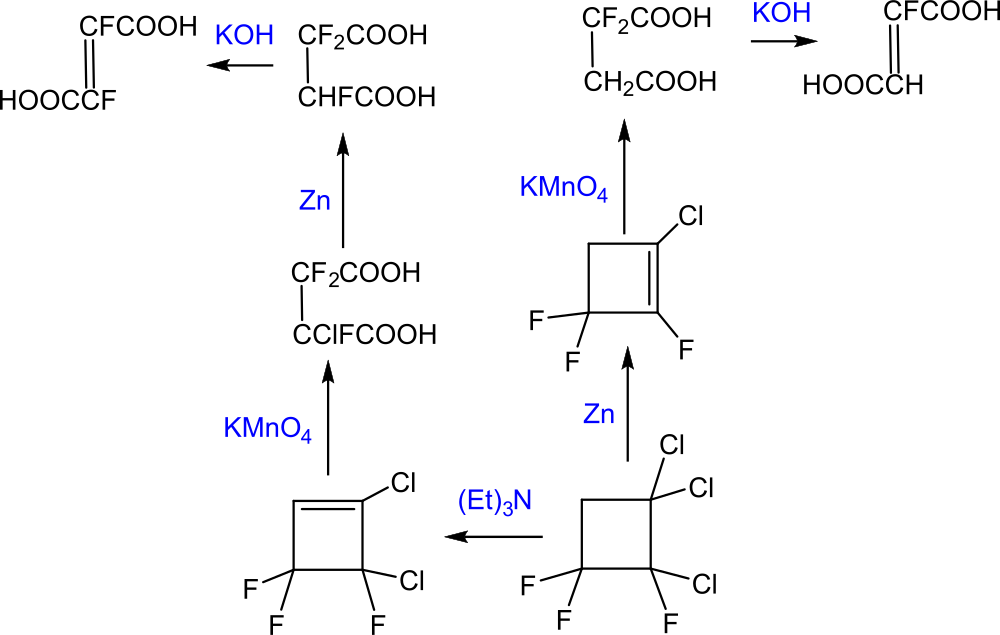
In many cases, the oxidation of fluorochlorocycloalkenes and perfluorocycloalkenes led to the formation of dicarboxylic acids. For instance, M.S. Raasch with co-workers [14] described the synthesis of a series of mono- and difluorobutenoic acids (Scheme 3) from 1,1,2-trichloro-2,3,3-trifluorocyclobutane, which was prepared by the addition of chlorotrifluoroethylene to 1,1-dichloroethylene (180 ºC, 10 hours).
Scheme 3 [14].
In the next step, depending on the reaction conditions, 1,1,2-trichloro-2,3,3-trifluorocyclobutane was converted either by dehydrochlorination into 1,4-dichloro-3,3,4-trifluorocyclobutene (using triethylamine as the dehydrochlorinating agent, yield 87%) or by dehalogenation into 1-chloro-2,3,3-trifluorocyclobutene (using metallic zinc as the dehalogenating agent). Chlorotrifluorosuccinic acid (85% yield) and 2,2-difluorosuccinic acid were prepared respectively from the obtained chlorofluorocyclobutenes by oxidation with potassium permanganate in an alkaline medium.
To determine the structure of pentafluoro-1-trifluoromethylcyclobutene (I, Scheme 4), R. N. Haszeldine and J. E. Osborne [13] performed its oxidation with KMnO4 to yield keto acid II, followed by its haloform cleavage to form perfluorosuccinic acid (75 °C, 8 h, autoclave, 69% yield) (Scheme 4).

Scheme 4.
Similarly, the oxidation of nonafluoro-1-trifluoromethylcyclohexene with KMnO4 in an alkaline medium (80˚C, 15 h, closed tube) yielded the sodium salt of perfluoroadipic acid (NaOOC-(CF2)4-COONa) with a yield of 75%.
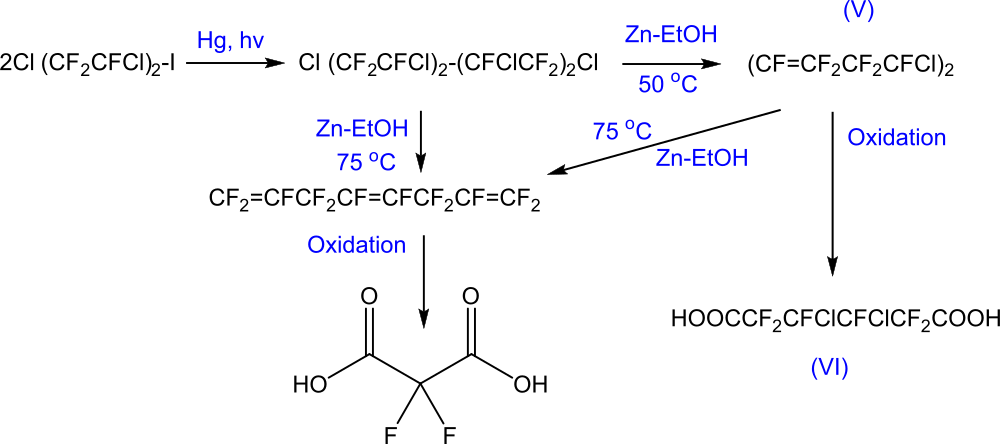
R.N. Haszeldine in his works [12,16] proposed a general method for the synthesis of fluorinated mono- and dicarboxylic acids from fluorinated chlorofluoroalkenes prepared by dehalogenation of the telomerization products of chlorotrifluoroethylene and 1,2-dichloro-1,2,2-trifluoriodoethane (Equation 1, Scheme 5). To prepare monocarboxylic acids, the iodine atom in compound (III) was replaced with chlorine. In the next step, the terminal group (CF2Cl-CFCl-) was converted by dehalogenation into a (CF2=CF-) group, the oxidation of which afforded the corresponding carboxylic acid (Equation 2, Scheme 5) [12]. The article describes, as examples, the synthesis of 4,4-dichlorohexafluorobut-1-ene followed by the synthesis of β,β-dichlorotrifluoropropionic acid (KMnO4, NaHCO3 as a buffer) and 4,6,6-trifluoronafluorohexene-1, followed by oxidation to 3,5,5-trichlorohexafluoropentanoic acid, etc.

Scheme 5.
To prepare dicarboxylic acids, the coupling reaction of iodide (III) was performed to afford fluorochloroalkane (IV) (Equation 3, Scheme 5), which contained internal (–CFCl-CFCl-) fragments in addition to the terminal (CF2Cl-CFCl-) ones [16]
Since dechlorination of terminal groups was usually easier than dechlorination of internal ones, both dienes and trienes could be prepared by varying the synthesis conditions. The subsequent oxidation of dienes and trienes led to the formation of dicarboxylic acids.
Scheme 6 shows the synthesis of perfluoroocta-1,4,7-triene followed by the preparation of perfluoromalonic acid (KMnO4, NaHCO3, 35˚C, 1 h, 60˚C, 1 h, 63% yield). Oxidation of the internal double bond in the triene resulted in the formation of two molecules of dicarboxylic acid. Under milder conditions, dehalogenation resulted in the formation of 4,5-dichlorododecafluoroocta-1,7-diene (V), from which 3,4-dichlorohexafluoroadipic acid (VI) was obtained by oxidation (yield 51%).
Scheme 6 [16].
Fluorinated carboxylic acids of the general formula CH3(CF2)nCOOH were synthesized by Ch.S. Rondestvedt, Jr. [17] via the oxidation of the corresponding alkenes CH3(CF2)nCH=CH2 prepared by telomerization. The author used 1,1-difluoroethyl iodide as a telogen, which reacted with tetrafluoroethylene in the presence of radical initiators (Scheme 7). In the next step, ethylene was added to the resulting iodide CH3(CF2)n-I.

Scheme 7.
The fluorinated alkene with n=11 was prepared by refluxing the corresponding iodide in a KOH solution in ethanol for 19 h (yield 98.6%). Then, an aqueous solution of KMnO4 (alkene:oxidizer molar ratio = 0.2:0.67) was added to olefin at 90˚C for 2.5 h. After isolation and distillation, the corresponding acid CH3(CF2)11COOH (b.p. 172˚C (28 mm), m.p. 92-93˚C) was synthesized with a yield of about 44%.
The synthesis method of fluorinated carboxylic acids via the oxidation of fluoroalkenes, proposed by A. Henne and co-workers [2], was subsequently recognized as classical [11]. The use of various media and oxidizing agents has expanded the scope of application of this method.
A series of α,ω-perfluorodicarboxylic acids were prepared in an acetone (50%)-water medium by the oxidation of α,ω-perfluorodiolefins (KMnO4, room temperature, 5 hours) [9]. The starting α,ω-perfluorodiolefins were synthesized by dehydrochlorination of the corresponding α,β,ψ,ω-tetrachloroperfluoroalkanes (Scheme 8).
CF2=CF(CF2CF2)nCF=CF2 → HOOC(CF2CF2)nCOOH,
n=2 (yield 86%, m.p. (134-135°С),
n=3 (yield 95%, m.p. (143-144°С),
n=4 (yield 92%, m.p. (160-161°),
n=6 (yield 71,8%, m.p. (191-193°С).
Scheme 8.
The nature of the oxidative action of KMnO4 on alkenes of the type HOCH2(CF2)nCF=CF-R (n=2, 4, 6) in various media was studied by T. Nguen (e.a.) [10]. In acetone, oxidation occurred only at the double bond (the yield of oxyacids was 70% (n=4) and 56% (n=6)). In an acetic acid medium, the hydroxyl group was also subjected to oxidation upon boiling (Scheme 9):
HOCH2(CF2)nCF=CF-R → HOCH2(CF2)nCO2H, (KMnO4, acetone, r.t.);
HOCH2(CF2)nCF=CF-R → HO2C(CF2)nCO2H, (KMnO4, AcOH, refluxing).
Scheme 9.
It should be noted that when the multiple bond contains only perfluoroalkyl substituents, as for example in the structure of TFE or HFP oligomers, diols are formed upon exposure to KMnO4. The oxidation of trialkyl-substituted fluoroolefins in many cases led to the formation of α-hydroxy ketones. Examples of such reactions are given in the review [18].
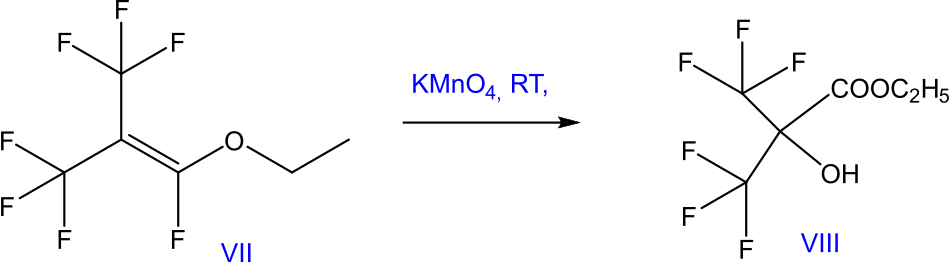
An interesting example of the oxidation of ethyl perfluoro-iso-butenyl ether is given in the article [19] (Scheme 10). Ether (VII) was oxidized with KMnO4 in a water-acetone medium at room temperature to give ethyl α-hydroxyhexafluoroisobutyrate (VIII) in ~ 87% yield.
Scheme 10 [19].
The use of other oxidizing agents besides potassium permanganate for the obtaining of fluorocarboxylic acids has been described. For instance, C. Guizard et al. [20] performed the oxidation of (perfluorooctyl)ethylene, (diperfluorohexyl)ethylene, and hexafluoropropene (HFP) using a RuO2–oxidant system (peracetic acid, periodic acid, or sodium hypochlorite) in 1,1,2-trifluorotrichloroethane (R-113). According to the authors of the cited work, ruthenium tetroxide was the oxidizing agent in this reaction, which was prepared in situ in the reaction mixture from ruthenium dioxide. This was evidenced by a change in the color solution from black (RuO2) to yellow (RuO4). Thus, perfluorononanoic acid was prepared from perfluorooctylethylene (yield 92%), perfluoroheptanoic acid from (diperfluorohexyl)ethylene, and perfluoroacetic acid from HFP.
According to a number of authors, the RuO2 ̶ NaOCl system may be a more effective reagent than KMnO4 for the oxidation of fluorinated alkenes with internal double bonds. For example, article [11] describes the interaction of alkenes of the general formula CF3(CF2)pCF=CF(CF2)mCF3 using KMnO4 in aqueous KOH under reflux (Scheme 11) and the RuO2-NaOCl system. Several advantages of using the RuO2-oxidizer system were noted:
- carrying out the reaction at room temperature and with a short reaction time (~1.5 hours)
- the use of catalytic amounts of ruthenium dioxide and a higher yield of the target product
- visual monitoring of the reaction by color change.
The oxidation of the alkene C10F18 was given as an example. The yield of acids in the case of KMnO4 was 50% (Scheme 11), whereas when using RuO2-NaOCl the yield reached 80%.
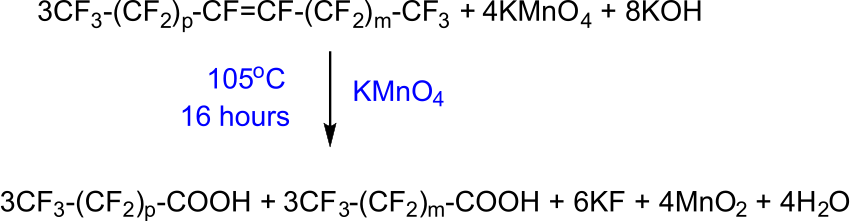
Scheme 11. Oxidation of C10F18 alkene with potassium permanganate [11].
The examples cited in the review [18] also confirm the more efficient oxidation of fluorinated alkenes by the RuO2-NaOCl system to produce fluorinated carboxylic acids. It should be noted that the use of RuO2 requires an additional step of regenerating the expensive catalyst.
The article [21] presents the results of a study of the transformations of methyl perfluoro-5-oxa-6-heptenoate under the action of oxidizing agents (K2S2O8, H2O2) under conditions similar to those of emulsion polymerization (60ºC, sodium triphosphate, emulsifier). When using K2S2O8, the degree of alkene conversion over 6.5 hours was 14.2%, with perfluorosuccinic acid being the main product (Scheme 12). Similar results were obtained using hydrogen peroxide. In the absence of an oxidizing agent, the substrate was stable.
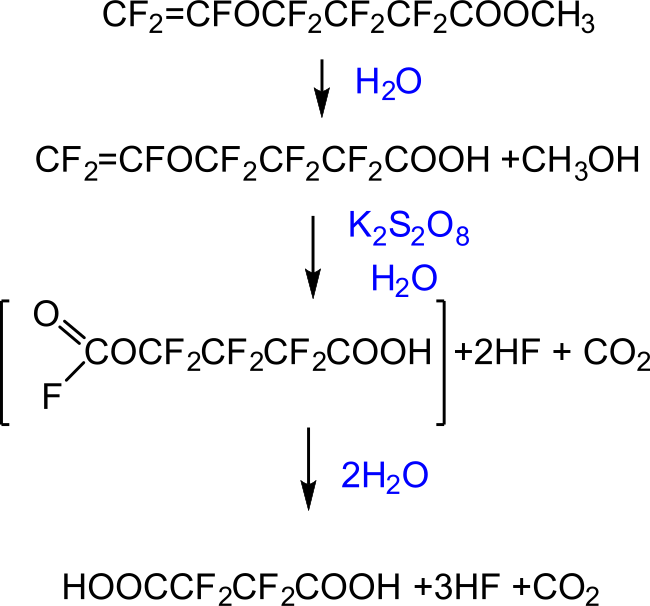
Scheme 12 [17].
To improve the efficiency of the synthesis of fluorinated carboxylic acids by the oxidation of fluoroalkenes, the use of phase transfer catalysts has been proposed in a number of studies. Thus, the article [22] describes the oxidation of 4,4-bis-trifluoromethyl-5,5,6,6,7,7,7-heptafluoroheptene-1. It was found that the reaction accelerated dramatically upon adding methyltricaprylammonium chloride (Aliquat 336) as a catalyst (Scheme 13):
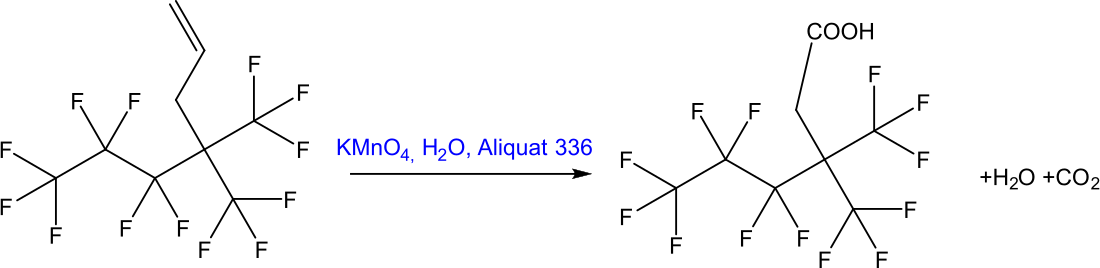
Scheme 13 [22].
The patent [23] describes a method of producing perfluorocarboxylic acids by the oxidation of perfluoroalkyl alkenes with potassium permanganate in water in the presence of catalytic amounts of quaternary ammonium salts containing alkyl and/or arylalkyl groups. At moderate temperature, a process duration of 1-5 h and an alkene: KMnO4 ratio of 1:3.5÷4, the yield of acids reached 93-99%. The following compounds were used as catalysts: (С8Н17)3СН3N+Cl-; (C8H17)2(CH3)2N+Cl-; (C10H21)2(CH3)2N+CH3SO4- and the similar compounds in an amount of 0.01-0.05 mol/1 mol of alkene.
Some examples are presented in Table 2.
Table 2. Preparation of perfluorocarboxylic acids by the oxidation of alkenes with a perfluoroalkyl substituent.
|
Alkene |
Acid (RFCO2H) |
Alkene/ KMnO4 ratio |
Conditions |
Yield, % |
|
C6F13CH=CH2 |
C6F13CO2H |
0,2:0,8 |
40-70˚C, 3 h |
96,8 |
|
C6F13CH=C(CH3)2 |
C6F13CO2H |
0,2:0,43 |
- |
95,8 |
|
(CF3)2CF(CF2)4CH=CH2 |
(CF3)2CF(CF2)4CO2H |
0,2:0,69 |
40˚C, 3 h |
93,4 |
|
F(CF2)10CH=CH2 |
F(CF2)10CO2H |
0,2:0,71 |
50-55˚C, 3 h |
87,8 |
|
C8F17CH=CH2 |
C8F17CO2H |
- |
50-55˚C, 5 h |
99,3 |
|
(CF2CF2CF2CH=CH2)2 |
(CF2CF2CF2CO2H)2 |
0.1:0.7 |
20˚C, 1 h |
78 |
2. Preparation of fluorinated carboxylic acid derivatives from ethers
Another approach to the synthesis of fluorinated carboxylic acids from fluorinated alkenes is based on the hydrolysis and pyrolysis (catalytic pyrolysis) of saturated ethers of the general formula R-CXH-CX2-O-R' and ethers of the general formula R-CX=CX-O-R' (X is a halogen, predominantly fluorine), which can be obtained by reacting fluorinated alkenes with alcohols. Hydrolysis of such ethers using acids (most often H2SO4) yielded esters of fluorinated carboxylic acids containing a hydrogen atom in α-position (R-CFHCOOR').
One of the first mentions of this method was found in a DuPont patent [24], which disclosed the process for preparing polyfluoroethyl ethers from fluorinated alkenes and alcohols (elevated pressure, temperature 25÷175ºC, presence of bases). One example describes the synthesis of difluorochloroethyl ethyl ether from 1,1-difluorochloroethylene and ethanol and its structure was confirmed by preparing and identifying ethyl chloroacetate (ClCH2-C(O)O-C2H5). The synthesis was carried out by heating the starting ether on silica gel. Another example describes the reaction of chlorotrifluoroethylene (CTFE) with ethanol to form ethyl chlorofluoroacetate (HCFClCF2-O-C2H5), the structure of which was confirmed by catalytic hydrolysis.
Shortly thereafter, J.D. Park with co-workers described the synthesis of fluorochloroacetic (CFClHCOO-R’) and difluoroacetic (CF2HCOO-R) acid esters by hydrolysis of ethers, which, in turn, were prepared by the interaction of alcohols with CTFE (RO-CF2CFClH) and tetrafluoroethylene (RO-CF2CF2H) (Scheme 14) [25, 26].
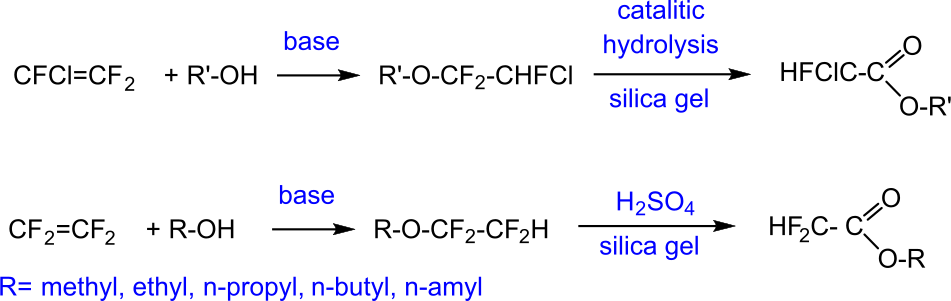
Scheme 14 [25, 26].
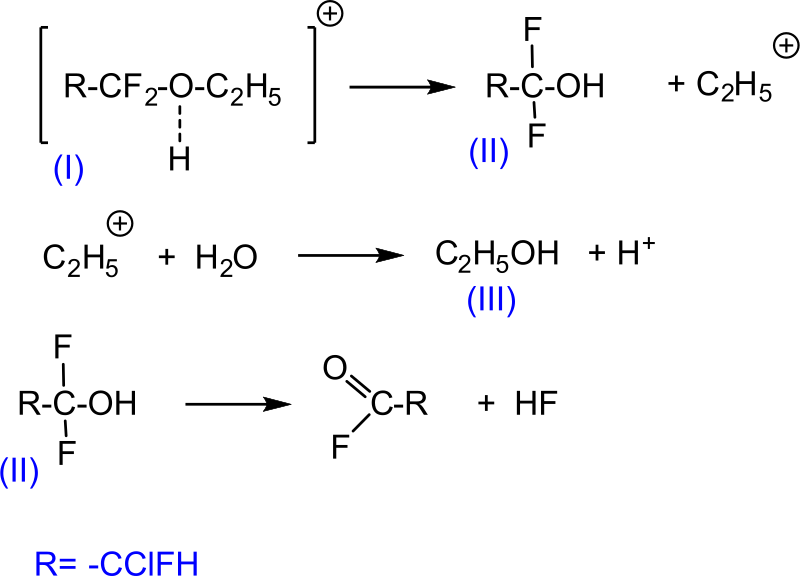
A possible mechanism for the process was proposed in 1949 by J.A. Young and P. Tarrant [27] using the hydrolysis of chloro-1,1,2-trifluoroethyl ethyl ether as an example. According to the authors of the cited work, the interaction began with a proton attack on the oxygen atom of the ether fragment. The intermediate ion (I) was split into a molecule of unstable α,α-difluorocarbinol (II) and a carbocation C2H5+, which, in turn, formed a second molecule of alcohol (III) (Scheme 15). The rearrangement of α,α-difluorocarbinol (II) led to the formation of acyl fluoride, which at the last stage of the reaction interacted with a molecule of alcohol (III) to form an ester.
Scheme 15.
J.A. Young and P. Tarrant also developed a preparative method for the synthesis of chlorofluoroacetic [27] and difluoroacetic [28] acid derivatives, noting the main patterns of the process:
- the hydrolysis reaction is exothermic, requiring effective cooling;
- at higher temperatures, the yield was lower due to side reactions.
- a decrease in the acid concentration led to a decrease in the yield. The best yield of ethyl chlorodifluoroacetate (83%) was obtained at 10°C using a twofold excess of 96% H2SO4.
- carrying out the process in a copper reactor, as well as using 85% phosphoric acid instead of sulfuric acid, led to a decrease in the yield.
The article [27] described the preparation of methyl, ethyl, and propyl esters of chlorofluoroacetic acid in yields of 55, 83, and 66%, respectively. Pure chlorofluoroacetic acid was prepared by treatment of ethyl chlorofluoroacetate with a 10% NaOH solution (15˚C, 3 h) in a 50% yield after distillation.
In 1956, J.D. Park [29] with co-workers synthesized ethyl esters of propionic acids with the general formula CF3CHXCOOC2H5 (X=Cl, F) from saturated ethers prepared by adding ethanol to chlorofluoropropenes with the general formula CF3CX=CX2 (X=Cl, F) [29]. For the synthesis of esters, the starting ethers were subjected either to acid-catalyzed hydrolysis (H2SO4) or to pyrolysis in the presence of quartz sand.
I.L. Knunyants and co-workers [30–32] described the addition of alcohols to hexafluoropropene (HFP) to form alkyl β-hydroperfluoropropyl and alkyl perfluoropropenyl ethers, followed by the synthesis of esters, specifically methyl and ethyl β-hydroperfluoropropionates [31].
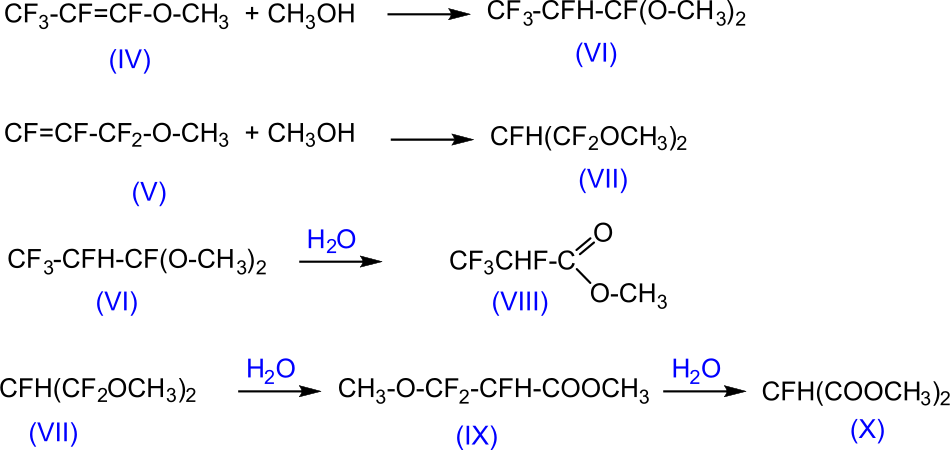
In study [32], the hydrolysis of isomeric 1,1- and 1,3-dimethoxy-2-hydroperfluoropropanes (VI) and (VII) was investigated. These compounds were prepared by the addition of methanol to methyl perfluoropropenyl (IV) and methyl perfluoroallyl (V) ethers. (Scheme 16). Acid hydrolysis of diester (VI) with 50% H2SO4 converted it into methyl β-hydroperfluoropropionate (VIII), whereas diester (VII) did not undergo the hydrolysis reaction. Under harsher conditions (conc. H2SO4), diester (VII) was hydrolyzed in the first step to methyl α-hydro-β-methoxy-perfluoropropionate (IX) and then to dimethyl fluoromalonate (X) (Scheme 16).
Scheme 16 [32].
The preparation of fluorocarboxylic acid esters by hydrolysis of ethers with a perfluoropropenyl fragment is also described in the article by Th. Nguen and C. Wakselman [36].
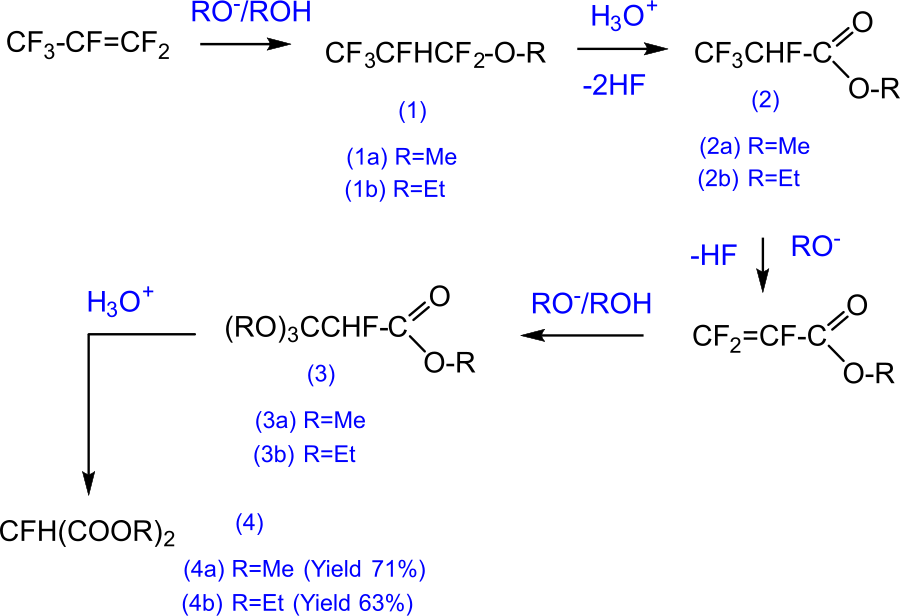
N. Ishikawa with co-workers using HFP as a starting compound synthesized methyl and ethyl esters of tetrafluoropropionic acid [40]. Further treatment of the esters with alcoholate and then with acid led to the production of the corresponding esters of fluoromalonic acid in high yields (Scheme 17):
Scheme 17 [40].
D.C. England with co-workers [41] in the process of studying the interaction of methanol with HFP at 10-25ºC found that in addition to the main product (CF3CFHCF2OCH3), “higher boiling compounds” are also formed, namely: CH3OCF2CFHCF2OCH3 (b.p. 121 ºC), CH3OCF=CFCOF (b.p. 142 ºC) and CH3OCF2CFHCOOCH3 (b.p. 159 ºC). Subsequently, the reaction of CF3CHFCF2OCH3 with SO3 at a temperature below 25˚C afforded tetrafluoropropionyl fluoride in a 90% yield. The pyrolysis of this product over NaF at 550˚C in the vapor phase led to perfluoroacryloyl fluoride (yield 90%, conversion 87%).
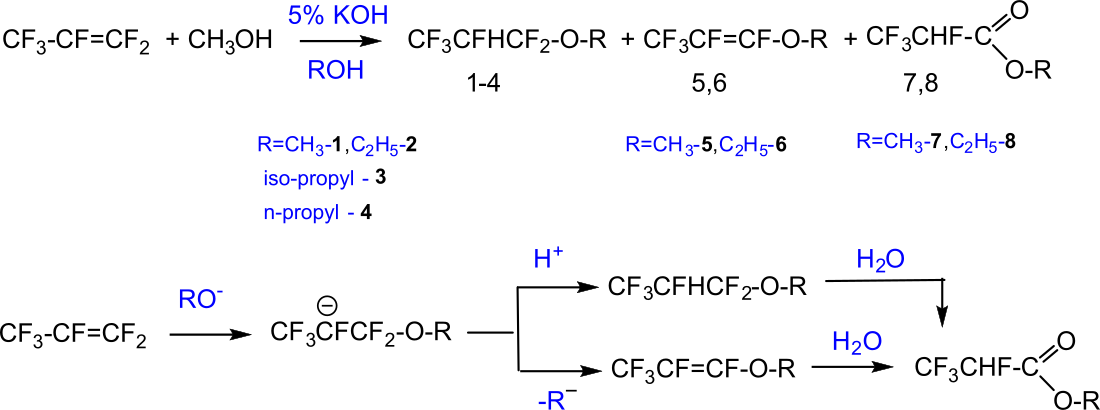
The article [42] describes the reaction of HFP with alcohols in the presence of catalytic amounts of sodium alkoxide or alkalis at a temperature of 20÷40ºC to form the addition products (1-4, Scheme 18) with high selectivity. The amount of by-products (5-8) did not exceed 5%. According to the authors of the cited work, the reaction began with the attack of the alkoxy anion (RO-) on the carbon atom at the double bond to form an intermediate carbanion. The latter interacted with a proton to form compounds 1-4. An alternative possibility with the elimination of the fluorine ion led to the elimination of HF to form alkyl perfluoropropenyl ethers 5 and 6. Hydrolysis of both types of compounds led to the production of alkyl esters of 2,3,3,3-tetrafluoropropionic acid (Scheme 18). The structures of all compounds were confirmed by NMR, IR and mass spectroscopy.
Scheme 18 [42].
A number of publications have demonstrated the possibility of synthesizing fluorinated carboxylic acids using octafluoroisobutylene (OFIB) adducts with alcohols. In particular, I.L. Knunyants with co-workers [43] described the preparation of 2-trifluoromethylmalonic acid derivatives. The hydrolysis of methoxy derivatives (CF3)2CHCF2OCH3 and (CF3)2C=CFOCH3 in the presence of concentrated H2SO4 allowed to get methyl 3,3,3-trifluoro-2-(trifluoromethyl)propanoate (XI) (Scheme 19).

Scheme 19.
Subsequent methanolysis in the presence of (C2H5)3N affected the trifluoromethyl group of (XI) and led to methyl difluoro(methoxy)methyl)-3,3,3-trifluoropropanoate (XII) and dimethyl 2-(trifluoromethyl)malonate (XIII) (ratio XII: XIII=25:75) with an overall yield of 11% (Scheme 20).
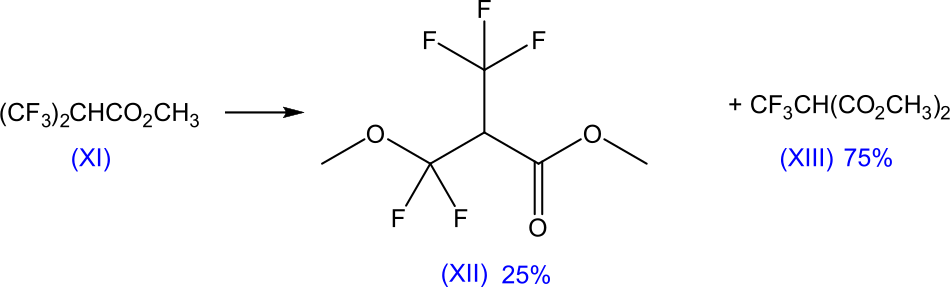
Scheme 20.
In turn, the hydrolysis (conc. H2SO4) of ester XII led to the target dimethyl 2-(trifluoromethyl)malonate (XIII) in a 66% yield (Scheme 21).
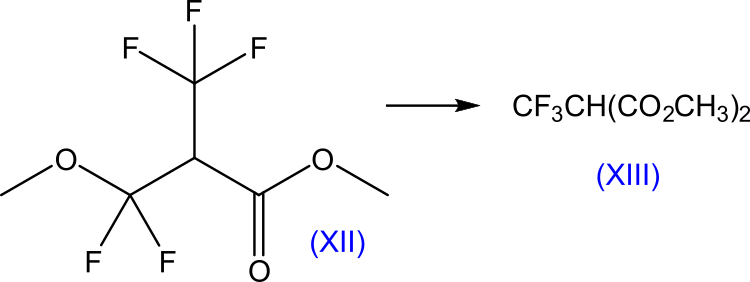
Scheme 21.
Subsequent transformation of the trifluoromethyl group in dimethyl 2-(trifluoromethyl)malonate (XIII) led to the formation of trimethyl methanetricarboxylate (Scheme 22):
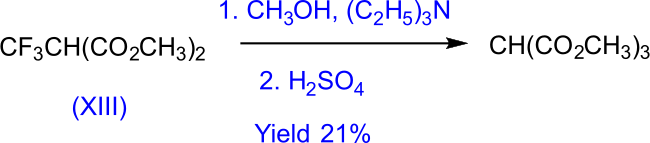
Scheme 22.
In the 1980s, this method was optimized by N. Ishikawa and T. Yokozawa for the synthesis of dimethyl 2-(trifluoromethyl) malonate. Carrying out the reaction in DMF medium at a temperature of 10-20˚C allowed increasing the yield to 68% [44].
The reaction of OFIB with tert-butanol yielded the ester as the major product, which was formed in situ via ether degradation followed by esterification of the acyl fluoride with the alcohol (Scheme 23) [45].
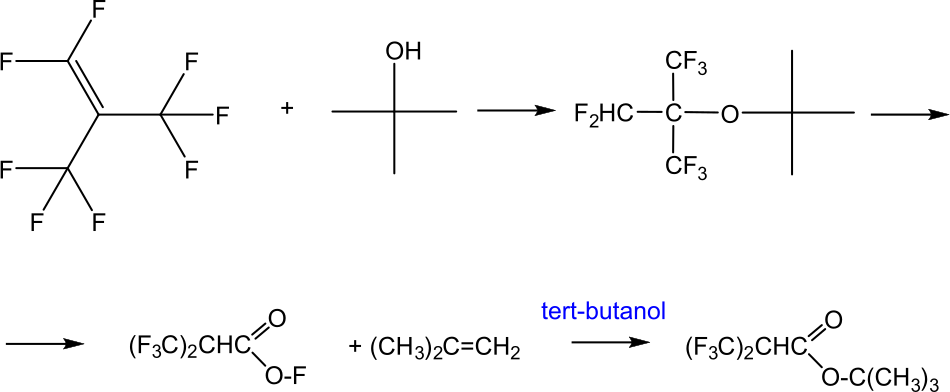
Scheme 23.
Ethers prepared by the addition of fluorinated alcohols to hexafluoropropene are more stable toward acid hydrolysis than those derived from non-fluorinated alcohols. Thus, according to Fokin with co-workers [39], fluorinated ethers of the formula H(CF2CF2)nCH2OCF2CHFCF3 (n=1-4) were stable toward sulfuric acid at room temperature, but upon prolonged heating they formed tetrafluoropropionic acid esters. For example, 2,2,3,3-tetrafluoropropyl-2,3,3,3-tetrafluoropropionate was obtained by heating the corresponding ether (n=1) in concentrated H2SO4 at 110-120˚C for 4,5 h in a 22,4% yield.
The transformation of fluorinated ethers into ester derivatives involves HF elimination (see Scheme 15). To scavenge the HF generated during hydrolysis, silicon dioxide was frequently added to the reaction mixture, for example, in the form of quartz sand [28, 30], crushed glass [31], or silica gel [25, 26].
Examples of ester synthesis via pyrolysis are also known. For example, in [29] the pyrolysis of ethyl 2-hydroperfluoropropyl ether (CF3CHFCF2OC2H5) in a thick-walled Pyrex tube is described. As a result of prolonged heating (12 h) at a temperature of 150˚C, ethyl 2,3,3,3-tetrafluoropropionate was obtained with a yield of 46% (b.p. 103-104˚C at 629 mm Hg) (Scheme 24):
2CF3CHFCF2OC2H5 + SiO2 → 2CF3CHFCO2C2H5 + SiF4.
Scheme 24.
Examples of catalytic pyrolysis with the formation of difluoroacetic acid fluoride and difluoroacetic acid esters are given in the Asahi Glass patent [46]. For instance, difluoroacetic acid fluoride was synthesized in a high yield by passing 1-ethoxy-1,1,2,2-tetrafluoroethane through a U-shaped reaction tube filled with activated γ-alumina at 200÷250ºC.
A patent by DuPont describes the preparation of carboxylic acid derivatives in the presence of catalysts from fluorinated methyl or ethyl esters containing the groups (-CF2-O-) or (=CF-O-) [47]. For example, α-hydrohexafluoroisobutyroyl fluoride was prepared from methyl 1,1,3,3,3-pentafluoro-2-(trifluoromethyl)propyl ether in the presence of antimony pentafluoride (T = -40ºC→RT) (Scheme 25). The reaction was monitored by the release of gaseous fluoromethane.

Scheme 25.
Other derivatives of carboxylic acids were prepared similarly, for example, 2,3,3,3-tetrafluoropropionyl fluoride was get from methyl 1,1,2,3,3,3-hexafluoropropyl ether.
Examples of the synthesis of fluorinated carboxylic acid esters from ethers are summarized in Table 3.
Table 3. Examples of the synthesis esters of fluorinated carboxylic acids from ethers
|
Ether |
Ester |
Synthesis сonditions |
Yield |
Ref. |
|
CHClFCF2OC2H5 |
CHClFCO2С2Н5 |
0÷10˚C, 2 h, (Н+) |
82,8 |
[27] |
|
CHF2CF2OC2H5 |
CHF2CO2С2Н5 |
55-57˚C, 3 h, (Н+) |
60 |
[28] |
|
CHF2CF2OCH3 |
CHF2CO2СН3 |
˂ 25˚C, (Н+) |
80 |
[33] |
|
ICF2CFClOC2H5 |
ICF2CO2C2H5 |
60-70°C , 1 h (H+) |
79 |
[34] |
|
CF3CHFCF2OC2H5 |
CF3CHFCO2C2H5 |
˂ 65.6˚C, (Н+) |
57,4 |
[29] |
|
CF3CHFCF2OC2H5 |
CF3CHFCO2C2H5 |
150˚С, 12 h (pyrolysis) |
46 |
[29] |
|
CF3CHClCF2OC2H5 |
CF3CHClCO2C2H5 |
0÷10˚C, 2 h, (Н+) |
- |
[29] |
|
CF3CHFCF2OCH3 |
CF3CHFCO2CH3 |
65˚С, 2 h (autoclave) |
65,6 |
[30] |
|
CF3CHFCF2OC2H5 |
CF3CHFCO2C2H5 |
75˚С, 2 h (autoclave) |
59,4 |
[30] |
|
CF3CHFCF2OCH3 |
CF3CHFCO2CH3 |
˂ 30˚C, ˃ 1 h (H+) |
74 |
[35] |
|
CF3CHFCF2OC2H5 |
CF3CHFCO2C2H5 |
˂ 30˚C, ˃ 1 h (H+) |
82 |
[35] |
|
CF3CHFCF2OC2H5 |
CF3CHFCO2C2H5 |
50˚С, 3 h |
67 |
[36] |
|
(СF3)2CHCF2OCH3 1) |
(СF3)2CHCO2CH3 |
120˚С, 10 h (Н+, autoclave) |
77,5 |
[31] |
|
CF3(CF2)4CHFCF2OC2H5 |
CF3(CF2)4CHFCO2C2H5 |
100˚С, 6 h |
19 |
[37] |
|
CF3CHFCF2OCH2CF3 |
CF3CHFCO2CH2CF3 |
80˚С, 3 h (autoclave) |
- |
[38] |
|
CF3CHFCF2OCH2CF2CF3 |
CF3CHFCO2CH2CF2CF3 |
80˚С, 3 h (autoclave) |
- |
[38] |
|
CF3CHFCF2OCH2CF2CF2H |
CF3CHFCO2CH2CF2CF2Н |
110-120˚С, 4,5 h (H+, autoclave) |
22,4 |
[39] |
1) also СF2=C(CF3)CF2OCH3 и (СF3)2C=CFOCH3
Unlike the examples above, perhalogenated ethers are stable to hydrolysis. However, these compounds can be cleaved by Lewis acids to afford perhalogenated acyl halides and perhaloalkanes.
G.V.D. Tiers [48] described the reaction of di-n-perfluoroalkyl ethers with AlCl3 under heating in an autoclave to afford acyl chlorides and trichloroalkanes (Table 4).
RFCF2OCF2RF → (RFCCl2OCCl2RF) → RFCOCl + RFCCl3.
Table 4. Results of the interaction of di-n-perfluoroalkyl ethers with AlCl3.
|
Ether |
Ratio Ether/AlCl3, mol |
Т, ˚С; τ, h |
Conversion |
Yield RFCOCl |
Yield RFCCl3 |
|
(C4F9)2O |
0,044:0,06 |
175˚С, 16 h, |
70% |
30% |
30% |
|
(C4F9)2O |
the same |
150˚С, 13 h |
45% |
No recovered |
8% |
|
(n-C6F13)2O |
0,168:0,263 |
230˚С, 15 h |
- |
43 |
- |
|
(n-C6F13)2O |
0,0382:0,06 |
185˚С, 14 ч |
77 |
31 |
63 |
In a similar manner, treatment of 5- and 6-membered cyclic perfluorinated ethers affords ω,ω,ω-trichloroperfluorocarboxylic acid chlorides (Table 5) [49].
cyclo-(CF2)nO → CCl3(CF2)n-2COCl, (n = 4, 5)
Table 5. Results of interaction of cyclic perfluorinated ethers with AlCl3.
|
Ether |
Ratio Ether/AlCl3, mol |
Т, ˚С; τ, h |
Conversion |
CCl3(CF2)n-2COCl |
CCl3(CF2)n-2CO2H |
|
cyclo-(C4F8)2O |
0.10:0,10 |
170˚С, 13 h, |
57% |
55% |
81 |
|
cyclo-(C5F10)2O |
0,075:0,10 |
180˚С, 13 h |
70% |
54 |
- |
In some cases, the formation of perfluoroacyl fluorides occurs during the cleavage of the ether bond under the action of other Lewis acids. I.L. Knunyants with co-workers demonstrated that the refluxing of alkyl perfluoroalkenyl ethers for 1-3 h in the presence of minor amounts of SbF5 or (C2H5)2O×BF3, yields perfluoroacrylic and perfluoromethacrylic acid fluorides in 39-68% yields [50].
CF3C(X)=CFOR → CF2=C(X)-CF(=O), X = F, CF3; R = CH3, C2H5.
References
- Vershilov S.V., Kornilov V.V., Tsyrulnikova A.S., Lebedev N.V., Methods for obtaining fluorine-containing carboxylic acids. Communication 1, Fluorine notes, Iss. 2(159), http://en.notes.fluorine1.ru/public/2025/2_2025/article_1.html, DOI: 10.17677/fn20714807.2025.02.01.
- Henne A.L., Alderson T., Newman M.S. Preparation of Polyfluorinated Acids. JACS, 1945, v. 67, p. 918-919.
- Henne A.L., Zimmerschied W.J. JACS, 1947, v. 69, p.281-283. Fluorinated Acids.
- Henne A.L., Trott P. JACS, 1947, v. 69, n. 7, p. 1819-1820. Improved Preparation of Trifluoroacetic Acid.
- McBee E.T., Wiseman P.A., Bachman G.B. Perfluoro Dibasic Acids and Derivatives. Ind. Eng. Chem., 1947, v. 39, p. 415.
- Henne A.L. US pat., 2438484 (1948). Fluorinated Dibasic Acids and Method of Preparing Same.
- Henne A.L., Riсhter S.B. JACS, 1952, v. 74, n. 21, p. 5420-5423. Perfluorinated Cyclic Ethers.
- M.W.Buxton, D.W.Ingram, F.Smith, M.Stacey, J.Tatlow. Organic Fluorides. Part XIII. The High-temperature Dimerisation of Chlorotrifluoroethylene. J. Chem. Soc., 1952, p. 3830-3834.
- I. L. Knunyants, Li Dzhi-yuan', V. V. Shokina. Perfluoro α,ω-diolefins and some of their reactions. Bull. Acad. Sci. USSR, Div. Chem. Sci., 1961, Vol. 10, No. 8, pp. 1361-1366.
- Nguyen T., Rubinstein M., Wakselman C., A Convenient Method for the Preparation of Perfluorodicarboxylic Acids. Synthetic Communications, 1983, 13(1), pp. 81-86, https://doi.org/10.1080/00397918308061962.
- A.Battais, B.Boutevin, Y.Pietrasanta, P. Sierra. Synthese d’acides perfluores de hauts poids moleculaires. J.Fluor.Chem., 1981/82, n. 19, p. 35-42.
- R.N.Haszeldine. Fluoroolefins. Part IV. Synthesis of Polyfluoroalkanes containing Functional Groups from Chlorotrifluoroethylene, and the Short-chain Polymerisation of Olefins. J. Chem. Soc., 1955, p. 4291-4302.
- R.N.Haszeldine, J.E.Osborne. Fluoro-olefins. Part III. Some Rearrangement Reaction of Polyhalogeno-olefins, and Routes to Butadienes. J. Chem. Soc., 1955, p. 3880-3888.
- M.S.Raasch, R.E.Miegel, J.E.Castle. Mono- and Difluorobutenedioic Acids. J. Am. Chem. Soc., 1959, v. 81, n. 6, p. 2678-2680.
- R.N.Haszeldine, J.E.Osborn. Addition of Free Radicals to Unsaturated Systems. Part XXII. Free-radical and Electrophilic Attack on Fluoro-olefins. J. Chem. Soc., 1956, p. 61-71.
- R.N.Haszeldine. Fluoro-olefins. Part V. Fluoro-dienes and –trienes and Perfluoromalonic Acid. J. Chem. Soc., 1955, p. 4302-4305, https://doi.org/10.1039/JR9550004302.
- Ch.S.Rondestvedt, Jr. Methyl-Terminated Perfluoroalkyl Iodides and Related Compounds, J. Org. Chem., 1977, v. 42, № 11, pp. 1985-1890.
- G.G.Furin, Perfluorinated Carboxylic Acids. Synthesis and Application, Fluorine Notes, Iss. 3(34), 2004, (http://en.notes.fluorine1.ru/contents/history/2004/3_2004/retro/index.html).
- U. Utebaev, E.G. Abduganiev, E.M. Rokhlin, I.L. Knunyants. Synthesis and some reactions of pentafluoroacetone. Bull. Acad. Sci. USSR, Div. Chem. Sci., 1974, Vol. 23, No. 2, pp. 352–357.
- C.Guizard, H.Cheradame, Y.Brunel, C.G.Beguin. Ozidative Cleavage of Partially or Perfluorinated Olefins by Ruthenium Tetroxide. J. Fluor. Chem., 1979, v. 13, n. 2, p. 175-177.
- Chekmarev P.M., Makeeva N.V., Maksimov V.L., Popova, L.A., Dreiman, N.A. Study of the oxidation and hydrolysis reactions of methyl perfluoro-5-oxa-6-heptenoate. Zh. Org. Khim. 1989, Vol. 25, No. 10, p. 2080–2083 (in Russian).
- W.Dmowski, H.Plenkiewicz, K.Piasecka-Maciejewska. Synthetic utility of 3-(perfluoro-1,1-dimethylbuthyl)-1-propene. Part III. Synthesis and properties of (perfluoro-1,1-dimethyl-butyl) acetic and propionic acid and their salts. J.Fluor. Chem., 1990, v. 48, p. 77-84.
- Werner K. von, Halsbach A.P. Process for the preparation of perfluorocarboxylic acids. USA Патент 4,751,027, 14 Jun. 1988.
- US pat. 2409274, 1946, Polyfluoro organic ethers and their preparation.
- Park J.D., Vail D.K., Lea K.R., Lacher J.R., Polyfluoro Alkyl Ethers and Their Preparation. J. Am. Chem. Soc., 1948, v. 70, p. 1550-1552.
- Park J.D., Sharrah M.L., Breen W.H., Lacher J.R., The Action of Alkanols on Tetrafluoroethylene. J. Am. Chem. Soc., 1951, v. 73, p. 1329-1330.
- J.A.Young, P.Tarrant. The Preparation of Some Derivatives of Chlorofluoroacetic Acid. J. Am. Chem. Soc., 1949, v. 71, p. 2432-2433, https://doi.org/10.1021/ja01175a055.
- J.A.Young, P.Tarrant. A New Method of Preparation of Esters of Difluoroacetic Acid. J. Am. Chem. Soc., 1950, v. 72, p. 1860-1861.
- J.D.Park, W.M.Sweeney, S.L.Hopwood, JR, J.R.Lacher. The Preparation and Properties of Some Fluorochloropropyl Alkyl Ethers. J. Am. Chem. Soc., 1956, v. 78, № 4, p. 1685-1686.
- I.L. Knunyants, A.I. Shchekotikhin, A.V. Fokin. Addition reactions of fluoro olefins. Communication 2. Addition of alcohols and thiols to perfluoropropylene. Bull. Acad. Sci. USSR, Div. Chem. Sci., 1953, Vol. 2, No. 2, pp. 257–263. (in Russian).
- I.L. Knunyants, L.S. German, B.L. Dyatkin. Reactions of fluoroolefins. Communication 6. Interaction of perfluoroisobutylene and perfluoropropylene with nucleophilic reagents. Bull. Acad. Sci. USSR, Div. Chem. Sci., 1956, Vol. 5, No. 11, pp. 1387-1393.
- M.D. Bagramova, Yu.A. Cheburkov, B.L. Dyatkin, I.V. Petrovskii, I.L. Knunyants. Reaction of hexafluoropropene with methanol at atmospheric pressure. Bull. Acad. Sci. USSR, Div. Chem. Sci., 1967, Vol. 16, No. 3, pp. 582–586.
- Sintezy Ftororganicheskikh Soedinenii [Syntheses of Fluoroorganic Compounds], Part 1, 2nd ed.; Igumnov, S.M., Igumnova, E.V., Eds.; ZAO NPO "PiM-Invest": Moscow, 2010; p 201. ISBN 978-85513-193-0.
- Syntheses of Fluoroorganic Compounds; Knunyants, I.L., Yakobson, G.G., Eds.; Springer-Verlag: Berlin–Heidelberg–New York–Tokyo, 1985. 302 p.
- N.Isikawa, A.Takaoka, M.Kamal Ibrahim. Preparation of 2-fluoromalonic esters and related compounds from fluoropropene. J.Fluor.Chem., 1984, v. 25, n. 2, p. 203-212.
- Th.Nguen, C.Wakselman. Transformation de l’hexafluoropropene en alcohol trifluoroallylique, precurseur des α-fluoroacrylates. J. Fluor. Chem., 1995, v. 74, p. 273-277.
- R.A.Shepard, H.Lessof, J.D.Domijan, D.B.Hilton, T.F.Finnegan. Ethers Derived from Fluoroolefins. J.Org.Chem., 1958, v. 23, n. 12, p. 2011-2012.
- V.A. Gubanov, A.V. Tumanova, I.M. Dolgopol'skii. Reaction of perfluoropropylene with 1,1-dihydroperfluoroalkyl alcohols. J. Gen. Chem. USSR, 1965, Vol. 35, No. 2, pp. 399–401.
- A.V. Fokin, V.A. Komarov, A.F. Kolomiets, A.I. Rapkin, O.V. Verenikin, T.M. Potarina. Reaction of polyfluorinated alcohols with fluoroolefins. Bull. Acad. Sci. USSR, Div. Chem. Sci., 1977, Vol. 26, No. 9, pp. 1983–1988.
- Isikawa Nobuo, Takaoka Akio, Ibrahim M.Kamal, Preparation of 2-fluoromalonic esters and related compounds from fluoropropene, J. Fluor. Chem., 1984, Vol. 25, Iss. 2, p. 203-212, https://doi.org/10.1016/S0022-1139(00)80949-5.
- England D.C., Solomon L., Krespan C.G.. Fluoroketenes. VII. Synthesis and Reactivity of Trifluoromethylfluoroketene, Perfluoroacryloyl Fluride, Perfluoromethacryloyl Fluoride, Methyl Perfluoroacrylate and Methyl Perfluoromethacrylate, J. Fluor. Chem., 1973, Vol.3, Iss.1, pp. 63-89, https://doi.org/10.1016/S0022-1139(00)82862-6.
- Ilyin A.A., Bahmutov U.L., Ilyin A.N., Ivanova L.M., Furin G.G., Tolstikova T.G., The use of tetrafluoroethylene and hexafluoropropylene in the synthesis of partly fluorinated alcohols and dialkyl ethers. Fluorine Notes, 2003, Iss. 5(30), http://notes.fluorine1.ru/contents/history/2003/5_2003/letters/index.html.
- I.L. Knunyants, S.T. Kocharyan, Yu.A. Cheburkov, M.D. Bagramova, E.M. Rokhlin. Reversible dehydrofluorination of 2-monohydroperfluoroisobutane and esters of α-hydrohexafluoroisobutyric acid. Dokl. Chem. (Engl. Transl.), 1965, Vol. 165, No. 4, pp. 1121–1124.
- Ishikawa N., Iokozawa T., Convenient Preparation of Dimethyl (Trifluoromethyl)-malonate and Related Compounds. Bull. Chem. Soc. Japan, 1983, v. 56, № 3, pp. 724-726.
- Koshar R.J., Simmons T.C., Hoffman F.W., The Addition of Alcohols to Octafluoroisobutene. JACS, 1957, т. 79, № 7, pp. 1741-1744.
- EP0694523, Preparation of difluoroacetic acid fluoride and difluoroacetic acid esters, 1996.
- Patent US4357282, 1982, Preparation of fluorocarbonyl compounds.
- Tiers G.V.D. The Chemistry of Perfluoro Ethers. II. Ether Cleavage with Simultaneous Replacement of α-Fluorine by Chlorine. JACS, 1955, v. 77, n. 24, p. 6703-6704.
- Tiers G.V.D., The Chemistry of Perfluoro Ethers. III. Synthesis of omega-Trichlormethylperfluoroacyl Chlorides by Cleavage of Cyclic Perfluoro Ethers. JACS, 1955, т. 77, № 24, pp. 6704-6706.
- Knunyants I.L., Abdugaliev Yo.G., Rokhlin E.M., Okulevich P.O., Karpunina N.I., Electrophilic elimination of alkyl flourides from alkyl flouroalkenyl ethers: A new way of synthesizing perfluoromethacrylic acid derivatives, Tetrahedron, 1973, vol. 29, Issue 4, pp. 595-601, https://doi.org/10.1016/0040-4020(73)85001-X.
ARTICLE INFO
Received 13 May 2026
Accepted 17 June 2026
Available online
June 2026
Recommended for publication by PhD M.A. Manaenkova
eLIBRARY Document Number (EDN) VTFBMJ

Fluorine Notes, 2026, 166, 1-2