Received: February 2026
DOI 10.17677/fn20714807.2026.02.01
Fluorine Notes, 2026, 165, 1-2
SOME DIRECTIONS OF FLUORINE CHEMISTRY
A SERIES OF LECTURES
COMMUNICATION 2. PART 4. KINETICS OF FLUORINATION OF LOWER HYDROCARBONS (C1-C3) AND THEIR FLUORO-SUBSTITUTED DERIVATIVES OVER COBALT TRIFLUORIDE AND MANGANESE TRIFLUORIDE
V.V. Kornilov
Abstract: Under conditions of isothermal process, fluorination of lower hydrocarbons and fluorinated alkanes with high valency metal fluorides (HVMFs) proceeded through two steps: non-steady state and quasi-steady state. External diffusion under experimental conditions did not affect the fluorination processes with cobalt trifluoride and manganese trifluoride. In the quasi steady state, the fluorination rate of methane, polyfluoromethanes, pentafluoroethane, 1,1,1,2-tetrafluoroethanes with cobalt trifluoride and pentafluoroethane with manganese trifluoride could be described by equations for first-order reactions. The observed zero order of the ethylene fluorination reaction is probably associated with another process mechanism, in which the rate-limiting step was the desorption of fluorinated ethane derivatives from the surface of metal fluorides.
Keywords: High valency metal fluorides (HVMFs), cobalt trifluoride, manganese trifluoride, non-steady state, quasi steady state, external diffusion, activation energy.
1. Introduction
In the first two parts [1,2] of the communication, based on publications by foreign researchers, the main theses of the cation-radical theory of fluorination with high valency metal fluorides (HVMFs) were considered and possible mechanisms of fluorination of aromatic [1] and aliphatic compounds [2] were discussed.
In the third part of the communication [3], the results of Russian researchers on the fluorination of methane, acetylene, ethylene, and C1-C2 polyfluoroalkanes with CoF3, MnF3, and CeF4 were presented; possible fluorination mechanisms at intermediate steps were considered and rearrangements associated with H-migration were described. In addition, the possible catalytic effect of hydrogen fluoride was discussed.
The final part of this communication is devoted to the study of the kinetics of fluorination processes using HVMFs. A very brief description of the kinetics was first published in a review article [4]. This communication provides more extensive information compared to [4].
It is known that the study of the kinetics of heterogeneous systems is a difficult task, since almost any heterogeneous process can be considered as a set of steps of various physical nature (external, internal diffusion, adsorption, chemical reaction, desorption, etc.). In addition, a characteristic feature of reactions involving solids is the localization of the reaction zone on the solid-solid interface between the solid reactant and the solid reaction product, and this surface is formed and changed as a result of the chemical process itself. The movement of the reaction zone into interior of solid сan lead the process to another state (for example, diffusion or adsorption to chemical reaction, and vice versa) even while maintaining constant values of the concentrations of gaseous components and the temperature of the system.
Finally, it should be noted that heterogeneous reactions are usually non-steady state (with the exception of heterogeneous catalysis), and their kinetic description is in fact a description of the evolution of the system - the change in its properties over time. That is why, despite the fact that the physical meaning of the processes occurring during heterogeneous reactions is quite clear, in most cases it is impossible to obtain a rigorous mathematical description of these reactions, and works studying the kinetics of heterogeneous processes are mainly devoted to simplified models.
2. Technique for studying the kinetics of fluorination with cobalt trifluoride
The processes of fluorination of methane, ethylene and polyfluoroalkanes with cobalt trifluoride are typical heterogeneous processes of the gas-solid type, and the reaction products contain both gaseous compounds (polyfluoroalkanes, hydrogen fluoride) and a solid substance (CoF2).
The main reasons for the disruption of non-steady state of such processes are given in [5-6]:
- Variability of the solid phase, which is resulted by the gradual transformation of cobalt trifluoride into cobalt difluoride (CoF3→CoF2).
- Since all fluorination reactions are highly exothermic, the fluorination process occurs under non-isothermal conditions.
- The volume of the system is increasing as hydrogen fluoride is obtained during the fluorination process.
The influence of these factors can be minimized by using a large excess of solid phase (compared to the required amount according to calculations) in combination with dilution of the initial reagents. Mixtures of 3-5% (vol.) organic compound with helium were used for research [5-7]. The choice of helium as a diluent was largely due to the simplification of GLC analyses, since helium was also used as a carrier gas.
A typical nickel reactor with an internal diameter of 36 mm and a height of 450 mm was used to study the kinetics [5]. The reactor contained approximately 400 g of cobalt fluorides. To control the temperature, the reactor was equipped with thermocouple in a thin-walled nickel tube (d=3 mm) located along the vertical axis of the reactor. The thermocouple could be moved within the tube thus obtaining a temperature profile along the reactor's height. The procedure for manganese trifluoride was similar.
3. Study of the kinetics of fluorination of lower hydrocarbons and their fluoro-containing derivatives (С1-С3)
It has been experimentally established [5,6] that during the fluorination of dilute hydrocarbon mixtures, two steps of the process take place: non-steady state and quasi-steady state. During the initial period of fluorination (usually no more than 15-20 minutes), continuous changes in the composition of the products were observed. Then, the composition of the products stabilized, which meant that the system had reached a quasi-steady state. In this state, the change in the degree of conversion of cobalt trifluoride over time was so insignificant that it had practically no effect on the observed degree of conversion of the gas phase over several hours. For example, 2 hours after the start of the supply of dilute methane at a flow rate of 4÷7 dm3/hour, the drop in cobalt trifluoride activity was only a few percent [5].
A noticeable increase in the degree of conversion in the initial period was explained by the reaction occurring in the surface layers of cobalt trifluoride with the formation of nuclei of a new solid phase (cobalt difluoride) on the defects of the crystal lattice and their rapid subsequent growth [6]. After the entire surface of the trifluoride crystals was covered with a layer of difluoride, the process entered a quasi-steady state.
3.1. Non-steady state step of fluorination with cobalt trifluoride
Non-steady state step was studied by V.S. Asovich and R.A. Kostajev during the fluorination of hexafluoropropylene (HFP) with cobalt trifluoride [7].

Scheme 1.
To characterize such non-steady states, the authors introduced the concept of the observed degree of conversion (Xo), which was calculated using the following formula (in square brackets, the values of the concentrations of HFP and octafluoropropane after fluorination):
XO = [C3F8]/([ C3F8] + [CF3CF=CF2]) (1)
According to the authors, it is impossible to talk about the true degree of conversion in such non-steady states, since the amount of products entering and leaving the reactor may differ (for example, due to the adsorption of some of the species on the surface of cobalt trifluoride).
It was found that the nature of the non-steady state could differ depending on the fluorination temperature. For example, when the process was carried out at T~50ºC, at the initial step more than half of HFP entering the reactor was adsorbed by cobalt trifluoride and remained in the reactor.
When the process was carried out at a temperature of T=92ºC, the initial HFP and the final octafluoropropane were practically not retained on the surface of solid cobalt trifluoride. Even in the initial period of the fluorination, when the CoF3 surface was completely free, no more than 5% of initial amount of HFP was lost during passing through the reactor. When the quasi-steady state was reached, the material balance came in accordance with the chemical reaction equation (Scheme 1).
A mathematical model of the process was developed that took into account the various steps: the adsorption of HFP on the surface of CoF3, the chemical reaction on the surface CoF3, and the desorption of C3F8 from the surface of cobalt fluorides. The analysis of this model for different ratios of the constants of adsorption Ka), chemical reaction (Kr) and desorption (Kd) showed that several types of non-steady state are possible (Fig.1, curves 1-3).
The transition to a quasi-steady state with decrease of observed degree of conversion (curve 1) corresponded to the case where the rate-limiting step was a chemical reaction on the surface of CoF3 particles or desorption of the final product. The transition to a quasi-steady state with an increase in the observed degree of conversion (curve 2) corresponded to the case where the rate-limiting step was the adsorption of HFP on the surface of CoF3.
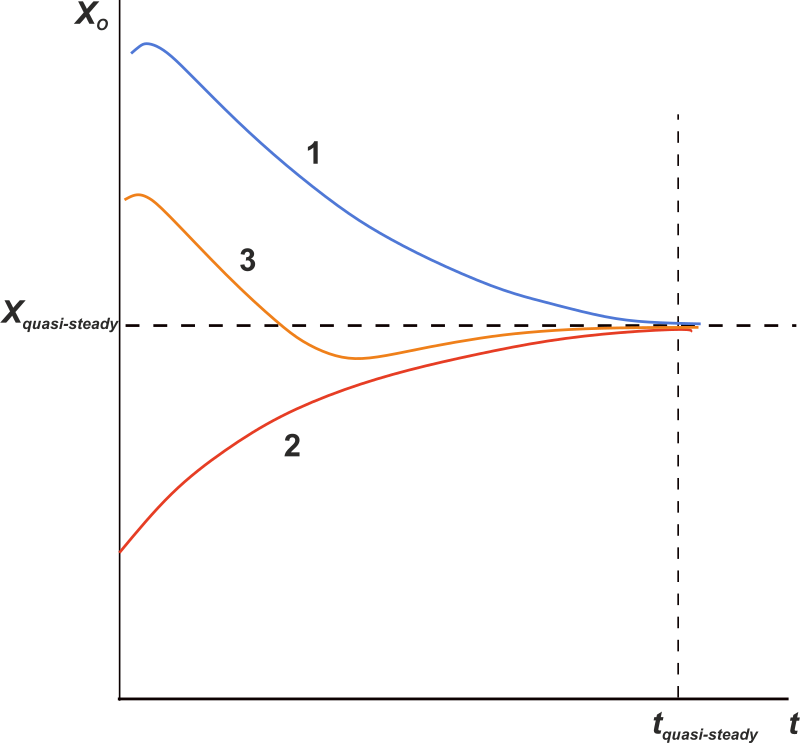
Fig. 1. Types of non-steady states.
XO –The observed degree of conversion, t- time
Ka: Kr: Kd 1- 50:1:50 and 50: 50:1; 2- 1:50:50; 3- 1:1:1[7].
According to the authors, at a temperature of 90ºC the rate-limiting step was the adsorption of HFP on the surface of cobalt trifluoride, and at 50°C it was either a chemical reaction or desorption of C3F8. Since it was experimentally established that octafluoropropane is poorly adsorbed on the surface of cobalt trifluoride even at low temperatures, this made it possible to exclude the desorption of C3F8 as a rate-limiting step. And the rate-limiting step at 50°C was a chemical reaction. Accordingly, when the fluorination temperature increased from 50 to 90°C, the rate-limiting step of the process changed [7].
3.2. The influence of external diffusion on the processes of fluorination with cobalt trifluoride
It is known that external diffusion becomes the rate-limiting step of the process at high chemical reaction rates and low diffusion rates [8]. In fluorination with HVMFs, this meant conducting reactions at maximum temperatures and minimum gas flow rates. At that case, the overall process rate was limited by the rate of substance transfer from the gas flow to the outer surface of the solid fluoride particles.
A characteristic feature of external diffusion is the dependence of the process rate on the linear velocity of the gas flow. Therefore, the absence of external diffusion is usually verified by the influence of this parameter [9].
Article [5] describes the determination of conditions under which external diffusion did not affect methane fluorination. For this purpose, a series of experiments were conducted to determine the degree of conversion at a constant contact time with various values of the parameter H/d (where H is the height of the solid phase layer and d is the internal diameter of the reactor).
It was found that external diffusion began to have an effect at H/d ratios less than 7, especially at long contact times. Therefore, further kinetic studies were carried out in reactors with a ratio of H/d ≈12.5.
Similar experiments were carried out for the fluorination of pentafluoroethane (a mixture of 5% pentafluoroethane and 95% helium) with cobalt trifluoride with different values of the cobalt trifluoride layer height and a constant contact time [6]. Table 1 shows the results of studies of the effect of linear velocity on the conversion of pentafluoroethane at a temperature of 260°C. The results in Table 1 show that, as in the case of methane fluorination, no external diffusion effect was observed.
Table 1. The results of studies of the effect of linear velocity on the conversion of pentafluoroethane (T=260 ºC).
|
Linear gas flow rate •104 m/sec |
4,5 |
5,5 |
8,5 |
12 |
|
Conversion, % |
60 |
62 |
60 |
61 |
Similarly, it was found that external diffusion did not affect the fluorination of 1,1,1,2 tetrafluoroethane with cobalt trifluoride and pentafluoroethane with manganese trifluoride [6].
3.3 Determination of chemical reaction order and kinetic parameters
To find the order of reactions, the dependences of the final concentrations of the reagents on the contact time at different temperatures were studied.
The results of such studies for the following systems were published in [5] (Fig. 2):
1) Fluorination of methane at 165 ºC
2) Fluorination of fluoromethane at 120 ºC
3) Fluorination of difluoromethane at 160 ºC
4) Fluorination of trifluoromethane at 320 ºC
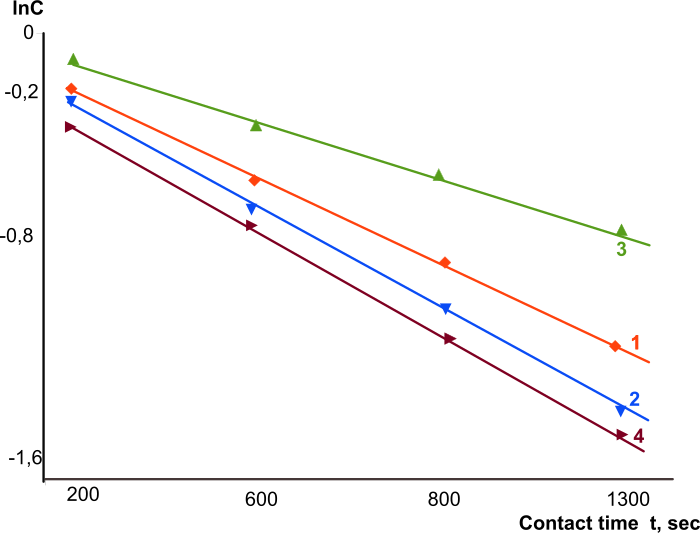
Fig. 2. Logarithmic dependences of the final concentrations of reagents (lnC) on the contact time (t) (1 – fluorination of СН4 at 165 ºC, 2 - CFH3 at 120 ºC, 3 - CF2H2 at 165 ºC, 4 - CF3H at 320 ºC) [5].
Since the experimental data (Fig. 2) were described fairly well by a linear dependence, it was concluded that all reactions are first order with respect to the starting compound [9].
The dependence of concentration on contact time for first-order reactions is generally described by equation (2):
ln (C /C0) = -kt (2),
where:
C0 - initial concentration value,
C - current concentration value,
t - contact time,
k - rate constant
For the processes of methane fluorination, a system of equations 3 was solved (the concentrations of the corresponding compounds in square brackets) [5].
|
d[CH4]/dt = -k1[CH4], |
d[CFH3]/dt = k1[CH4] – k2[CFH3], |
d[CF2H2]/dt = k2[CFH3] – k3[CF2H2], (3) |
|
d[CF3H]/dt = k3 [CF2H2] – k4[CF3H], |
|
d[CF4]/dt = k4 [CF3H]. |
To find the activation energies and pre-exponential factors, the ki=f(T) dependencies were approximated using the equation (4).
lnki = lnk0i - Ei/(RT) (4)
Similar calculations were carried out for the fluorination of difluoromethane and trifluoromethane. The results are presented in Table 2 [5].
Table 2. Pre-exponential factors k0, activation energies E (J/mol) and correlation coefficients r for the fluorination of methane, difluoromethane and trifluoromethane [5].
|
System |
Parameter |
Parameter values |
|||
|
CH4→CFH3 (k1) |
CFH3→CF2H2 (k2) |
CF2H2→CF3H (k3) |
CF3H →CF4 (k4) |
||
|
Methane fluorination |
k0 E r |
817000 74600 0,992 |
927,0 44300 0,974 |
2,199•109 105500 0,987 |
- - - |
|
Difluoromethane fluorination |
k0 E r |
- - - |
- - - |
5740000 82000 0,959 |
- - - |
|
Trifluoromethane fluorination |
k0 E r |
- - - |
- - - |
- - - |
8,867•109 146000 0,996 |
In the report by V.S. Asovich, B.N. Melnichenko and colleagues [6], the results of a study of the kinetics of fluorination of pentafluoroethane with cobalt trifluoride and manganese trifluoride, as well as 1,1,1,2-tetrafluoroethane with cobalt trifluoride were presented.
Table 3 shows the values of the final concentrations of pentafluoroethane depending on the contact time during interaction with cobalt trifluoride at temperatures of 175, 215 and 260 ºC.
Table3. Dependence of the final concentrations of pentafluoroethane on the contact time during fluorination with cobalt trifluoride (T=175, 215 и 260 ºC) [6].
|
Contact time t, (sec.) |
Final concentration CF3-CF2H, mol/dm3 •103 |
||
|
T=175 ºC |
T=215 ºC |
T=260 ºC |
|
|
824 |
1,85 |
1,50 |
0,79 |
|
330 |
1,98 |
1,80 |
1,23 |
|
165 |
2,03 |
1,94 |
1,65 |
|
103 |
2,05 |
1,98 |
1,76 |
The graph of the logarithm of the final concentration versus the contact time (Fig. 3) shows that the data satisfactorily fit on a straight line, indicating a first order reaction with respect to pentafluoroethane.
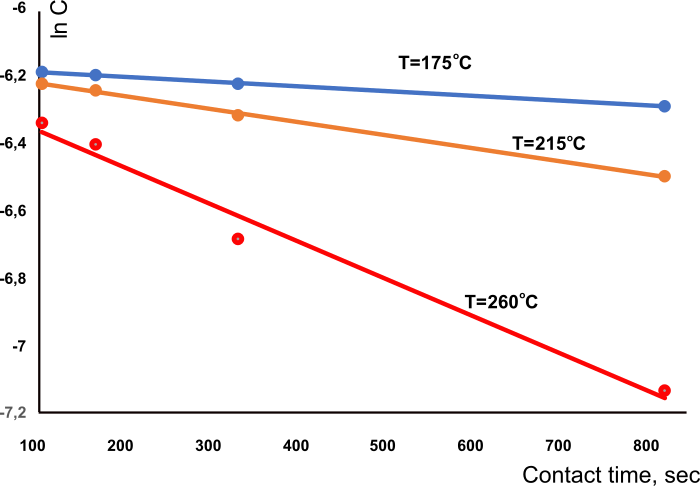
Fig.3.Logarithmic dependences of the final concentrations (lnC) of pentafluoroethane on the contact time (t) at 175,215 and 260ºC (fluorination with CoF3).
The found value of activation energy (E) was 53.1 kJ/mol, the pre-exponential factor and the equation for the rate constants were as follows:
kC2F5H = 221•е -53100/RТ (5)
Fig. 4 shows the dependence of the logarithm of the final concentration on the contact time during the fluorination of pentafluoroethane with manganese trifluoride. In this case, the experimental data in a certain temperature range were also well described by a linear dependence, which indicated first-order reactions.
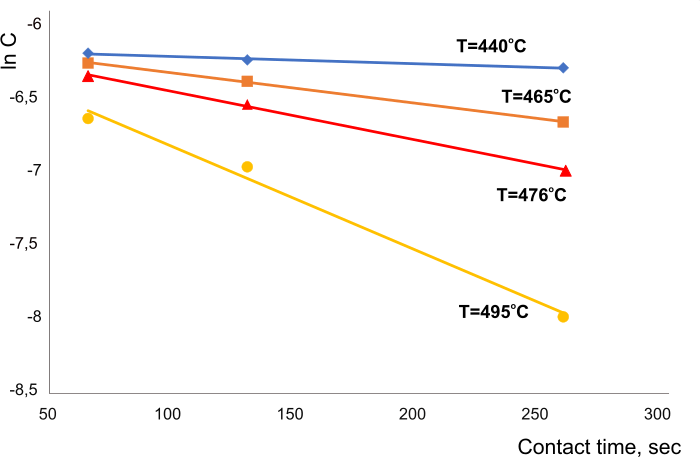
Fig.4.Logarithmic dependences of the final concentrations (lnC) of pentafluoroethane on the contact time (t) at 440,46, 476 anf 495ºC (fluorination with MnF3).
The following parameters were obtained for manganese trifluoride:
- activation energy E (kJ/mol) 206.7
- equation for the rate constant
kMn_C2F5H = 8.14 •1011 е -206700/RT (6)
Using a similar method, the parameters for the fluorination of 1,1,1,2-tetrafluoroethane with cobalt trifluoride were determined. Table 4 shows the final concentrations of 1,1,1,2-tetrafluoroethane at various contact times, and Figure 4 shows the logarithm of the final concentration as a function of contact time for temperatures of 97, 149, and 198 ºC, respectively.
Табл. 4. Dependence of the final concentrations of 1,1,1,2-tetrafluoroethane on the contact time at 97,149 and 198ºC (fluorination with CoF3)
|
Contact time t, (sec.) |
Final concentration •103 (mol/dm3) |
||
|
T=97 ºC |
T=149 ºC |
T=198 ºC |
|
|
96 |
2,880 |
2,810 |
2,480 |
|
315 |
2,830 |
2,500 |
1,860 |
|
789 |
2,740 |
2,190 |
1,088 |
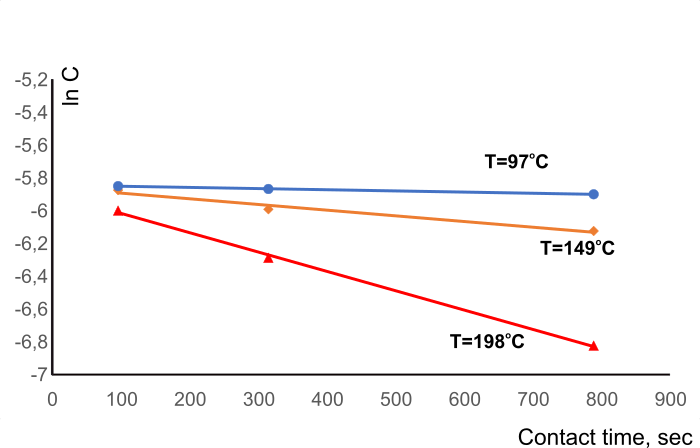
Fig 5. Logarithmic dependences of the final concentrations (lnC) of 1,1,1,2-tetrafluoroethane on the contact time (t) at 97,149 and 198ºC (fluorination with CoF3).
The activation energy (E) found was 41.3 kJ/mol, and the equation for the rate constant was as follows:
kCF3CFH2 = 54,1•е -41300/RТ (7)
To test the adequacy of equation (6), studies were conducted on the fluorination of a mixture of 15% (vol.) 1,1,1,2 tetrafluoroethane and 85% helium with cobalt trifluoride at 178ºC. The experimental and calculated data are presented in Table 5.
Table 5. Calculated and experimental final concentrations of 1,1,1,2 tetrafluoroethane at different contact times.
|
Contact time t, (sec.) |
Concentration from the experiment •103 (mol/dm3) |
Concentration calculated using equation (7) •103 (mol/dm3) |
|
96 |
5,6 |
5,3 |
|
196 |
5,2 |
4,9 |
|
296 |
4,7 |
4,5 |
|
392 |
4,4 |
4,1 |
Since the difference between the calculated and experimental concentrations did not exceed 7%, a conclusion was made about the correctness of applying equation (7) for a wide range of initial concentrations of 1,1,1,2-tetrafluoroethane.
In [10], the dependence of ethylene conversion on contact time during reaction with cobalt trifluoride in a flow reactor was studied (Fig. 6).
It was found that in the temperature range of 80–105 ºC, the reaction rate was constant and independent of the ethylene concentration. That is, the reaction was zero-order with respect to ethylene.
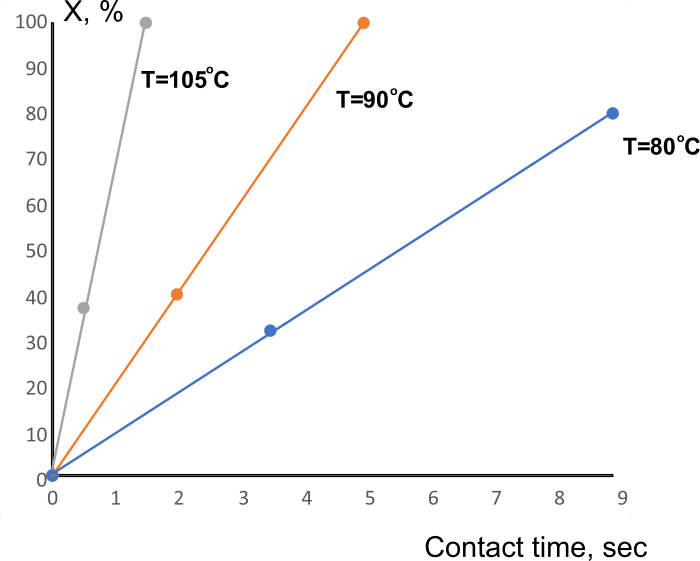
Fig. 6. Dependence of the degree of conversion X (%) of ethylene on the contact time t at temperatures of 80, 90 and 105ºC.
To explain the obtained results, the authors proposed a simplified process model that included the following assumptions:
1) the reactor operated as a plug flow reactor,
2) the reaction rate was determined by the rate of desorption of high-boiling products (1,1-difluoroethane, 1,1,2-trifluoroethane, HF) from the cobalt trifluoride surface,
3) the space vacated on the reaction surface by desorption of the reaction product was instantly occupied by an ethylene molecule from the flow or, in the absence of ethylene, by molecules of fluorinated species,
4) the rate of ethylene chemisorption significantly exceeded the rate of adsorption of its fluorinated derivatives.
The authors identified three streams of substances involved in the process:
- a stream of ethylene, which was adsorbed on the cobalt trifluoride surface;
- a stream of polyfluoroethanes, which were desorbed from the cobalt trifluoride surface. This stream limited the first stream;
- a stream of ethylene without adsorption, which passed freely through the reactor.
Based on the proposed model, the authors concluded that the reaction rate between ethylene and CoF3 was independent of the ethylene concentration in the gas stream. This was consistent with experimental data indicating a zero-order reaction with respect to ethylene.
Conclusions
The obtained kinetic study results suggest the following general patterns in the fluorination of lower hydrocarbons and fluorine-containing aliphatic compounds (C1-C3) with high valency metal fluorides:
- Under near-isothermal fluorination conditions, two process steps occur: non-steady-state and quasi-steady-state.
- The rate-determining step in non-steady-state conditions can vary depending on the fluorination temperature.
- External diffusion does not affect the fluorination of methane and polyfluoroethanes with cobalt and manganese fluorides, provided the reactor height-to-diameter ratio is above a certain value.
- In the quasi-steady state, the fluorination processes of methane, polyfluoromethanes, pentafluoroethane, 1,1,1,2-tetrafluoroethanes with cobalt trifluoride and pentafluoroethane with manganese trifluoride can be described by first-order equations. With an increase in the number of fluorine atoms in the molecule (СF2H2→CF3H, CF3-CFH2→CF3-CF2H, etc.), the activation energy (Ea) for each subsequent fluorination step increases. The Ea value for weak manganese trifluoride is significantly higher than the corresponding Ea for stronger cobalt trifluoride. These data are in good agreement with the cation-radical theory of fluorination of aliphatic hydrocarbons with high valency metal fluorides [2,3]. It can be assumed that at these fluorination steps, the rate-determining step is the chemical reaction.
- The observed zero order of the ethylene fluorination reaction in the temperature range of 80÷105 ºC can be explained by another process mechanism, where the rate-determining step is the desorption of fluorinated species from the surface of metal fluorides.
References
- Kornilov V. V., Fluorination with high valency metal fluorides, cation-radical theory of fluorination of aromatic compounds, Fluorine notes, Iss. 5(162), http://en.notes.fluorine1.ru/public/2025/5_2025/article_1.html, DOI: 10.17677/fn20714807.2025.05.01.
- Kornilov V. V., Possible mechanisms of fluorination of aliphatic hydrocarbons with high valency metal fluorides, Fluorine notes, Iss. 6(163), http://en.notes.fluorine1.ru/public/2025/6_2025/article_1.html, DOI: 10.17677/fn20714807.2025.06.0.1.
- Kornilov V. V., Fluorination of aliphatic compounds with high valency metal fluorides in the works of Russian researchers, Fluorine notes, Iss. 1(164), http://en.notes.fluorine1.ru/public/2026/1_2025/article_1.html, DOI: 10.17677/fn20714807.2026.01.0.1.
- Kornilov V.V., Kostajev R.A., Maximov B.N., Mel’nichenko B.A., Fiodorova T.E, Fluorination of organic compounds with Cobalt Trifluoride, Zhurnal Prikladnoi Khimii (Russian Journal of Applied Chemistry), Vol. 68, Iss 9, 1995, p. 1409-1417.
- Asovich V.S., Kornilov V.V., Kostajev R.A., Maximov B.N., Fluorination of methane and its fluoroderivarives by cobalt trifluoride, Zhurnal Prikladnoi Khimii (Russian Journal of Applied Chemistry), Vol. 67, Iss. 1, 1994, p. 103-107.
- Asovich V.S., Kornilov V.V., Kostajev R.A., Mel’nichenko B.A., Maruev A.V., Maximov B.N., Report “Fluorination of hydrocarbons by highest fluorides of cobalt, manganese and cerium”, The International Conference “Chemistry, Technology and Application of Fluorocompounds” (CTAF’94), Saint Petersburg, Russia, May 30- June 03, 1994.
- Asovich V.S., Kostajev R.A., Macrokinetic patterns of the fluorination of hexafluoropropene with cobalt trifluoride, Zhurnal Prikladnoi Khimii (Russian Journal of Applied Chemistry), Vol. 67, Iss. 8, 1994, p. 1320-1323. In Russian.
- Levenspiel O., Chemical Reaction Engineering, 1965, John Wiley and Sons, Inc., New York - London, DOI (3d edition, 1999): 10.1021/ie990488g.
- Avery H. E., Basic Reaction Kinetics and Mechanisms, Macmillan, 1974, 174 p., ISBN: 0333126963, https://doi.org/10.1007/978-1-349-15520-0.
- Kostajev R.A., Pashkevich D.A., Desorption of reaction products during the process of Ethylene Fluorination with Cobalt Trifluoride, Zhurnal Prikladnoi Khimii (Russian Journal of Applied Chemistry), Vol. 67, Iss. 10, 1994, pp. 1624-1628.
ARTICLE INFO
Received 10 February 2026
Accepted 27 February 2026
Available
online April 2026
Recommended for publication by PhD M.A. Manaenkova
eLIBRARY Document Number (EDN) QLBCKF

Fluorine Notes, 2026, 165, 1-2